



Luna Lite is not an online AI face swap tool where you upload a photo and get a result immediately. It is an application stack for building and running your own face-swap service, with a server, admin panel, WeChat mini program, template management, and an API layer for connecting an external face-swap model.
There are two versions worth separating. The original Luna Swapping is no longer maintained and its GitHub repository has been archived. Luna Lite is the lighter successor and is the version to look at if you are evaluating the project today.
What is Luna Lite?
Luna Lite is the application layer around an AI face-swap workflow. It includes the backend, admin dashboard, and WeChat mini program used to manage templates, digital identities, and generation jobs.
The actual face-swapping model is not bundled with the project. Image processing is handled through an external API, or through a model that a developer integrates separately.
That makes Luna Lite closer to source code for building a self-hosted face-swap application than to a consumer-facing AI face swap website.
Luna Swapping is discontinued, and Luna Lite replaces it
The older Luna Swapping project has stopped development and its repository is archived. For a new installation, there is little reason to start with the old codebase unless you specifically need to study or maintain an existing deployment.
Luna Lite cuts out several parts of the original system, including collection templates, many-to-many relationships, complex gameplay logic, and the old multi-person photo workflow. The remaining project is more focused on templates, digital identities, the mini program, and a unified face-swap API layer.
The backend stack changed as well. Luna Swapping used ThinkPHP 6, while Luna Lite moved to Laravel 11 with PHP 8.2 and MySQL 8.0. The frontend uses Vue 3, TypeScript, Element Plus, Vite, and uni-app. Its admin panel is built on Likeadmin-Laravel rather than being written entirely from scratch.
| Area | Luna Swapping | Luna Lite |
|---|---|---|
| Project status | Discontinued and archived | Repository remains available |
| Backend | ThinkPHP 6 | Laravel 11 |
| Direction | Broader face-swap business system | Lighter application framework |
| Face-swap engine | Relied on an external algorithm service | Unified API layer for third-party or self-hosted models |
| Multi-person face swap | Available in the older design | Still listed as TODO |
| Payments | Recharge and membership features were included | WeChat mini-program payments are still TODO |
| Installation | Components were deployed separately | Includes a Web installation wizard |
What can Luna Lite do?
AI face swap, portraits, and ID photos
Luna Lite keeps the main application framework for AI face swap, AI portrait, and AI ID photo services. Developers can build their own set of templates and connect the workflow to an external image-processing service.
The important distinction is that Luna Lite handles the product and workflow layer. It does not include a complete face-swapping model.
Digital identities
The project includes a digital identity workflow built around a front-facing photo. Users can create and manage their own identity records inside the application.
Because those workflows involve face images, a production deployment also needs to account for where images are stored and which external services receive them.
Face-swap template management
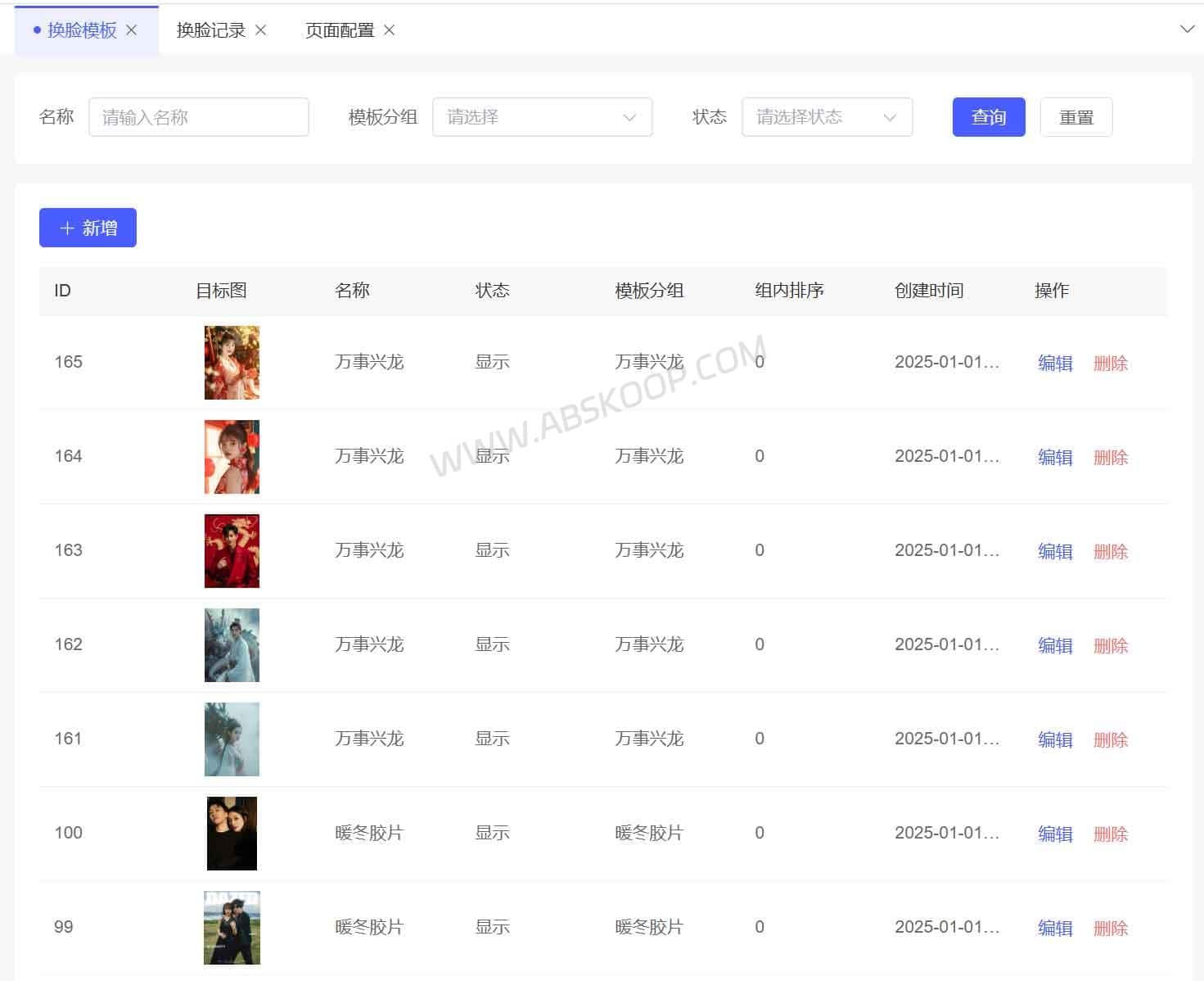
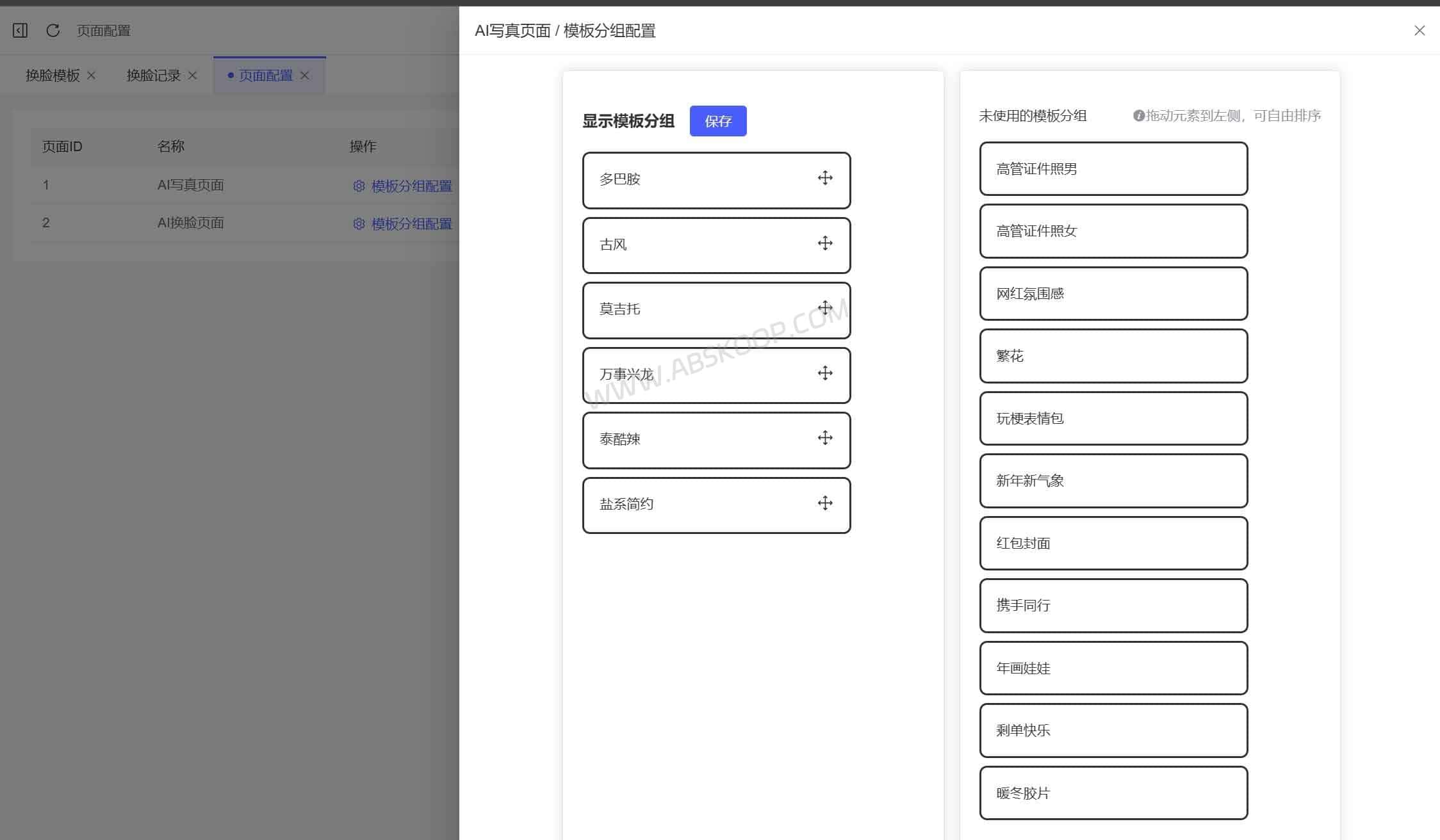
Templates can be created and managed from the admin panel, including template images, ordering, and page presentation.
The default design does not let ordinary users freely upload any target image. Target templates are managed by administrators, which gives the operator more control over what can be used inside the service.
WeChat mini program
Luna Lite includes a separate uni-app project for its WeChat mini program. Developers need their own WeChat AppID and must point the client to the deployed Luna Lite server.
This is one reason the project is better understood as a starting point for building a service rather than a ready-made face-swap website.
A unified AI face swap API layer
One of the more useful changes in Luna Lite is the unified API layer for the face-swapping engine.
The project’s own algorithm service was temporarily taken offline because of operating costs. The current codebase documents an integration with SenseTime and also allows developers to connect another third-party API or their own model.
So Luna Lite acts as the application shell around the face-swap engine. The engine itself has to come from somewhere else.
Is the Luna Lite face-swap model open source?
The application layer is available as source code, including the backend, admin panel, and mini-program client. The model that actually performs the face replacement is not included.
In a normal deployment, Luna Lite calls an external face-swap API. Developers can also connect their own model if they are prepared to implement the integration.
This means that hosting Luna Lite on your own server does not automatically make the entire image-processing pipeline local. Whether an image leaves your infrastructure depends on the algorithm provider you connect.
A fully local or internal deployment would require a separate face-swap model plus changes to the API and storage workflow.
How to deploy Luna Lite
Luna Lite comes with a packaged Release and a browser-based installation wizard, so you do not have to rebuild every frontend component before starting.
The documented environment includes:
- PHP 8.2
- MySQL 8.0
- Nginx
- Redis
- PHP fileinfo extension
- PHP Redis extension
- Alibaba Cloud OSS
- A WeChat mini-program account
- A working AI face swap API
After downloading the Luna Lite Release package, the Web root is pointed to the project’s public directory. Opening the site for the first time launches the installation wizard, which checks the environment and walks through the database, Redis, administrator account, and initial data setup.
Once the backend is running, the WeChat mini program, object storage, and face-swap API credentials still have to be configured before the full upload-to-generation workflow works.
Alibaba Cloud OSS is part of the default setup
Luna Lite’s documented deployment currently depends on Alibaba Cloud OSS. The digital identity workflow uses OSS image-processing features for face cropping.
That matters if you are looking for a fully self-hosted face swap system. The Luna Lite application can run on your own server, but the default architecture is not completely local: image storage and face processing can still involve external services.
To keep storage, image processing, and model inference entirely inside your own infrastructure, you would need to replace the OSS-dependent parts and connect an internal face-swap model or API.
Luna Lite admin and installation interface
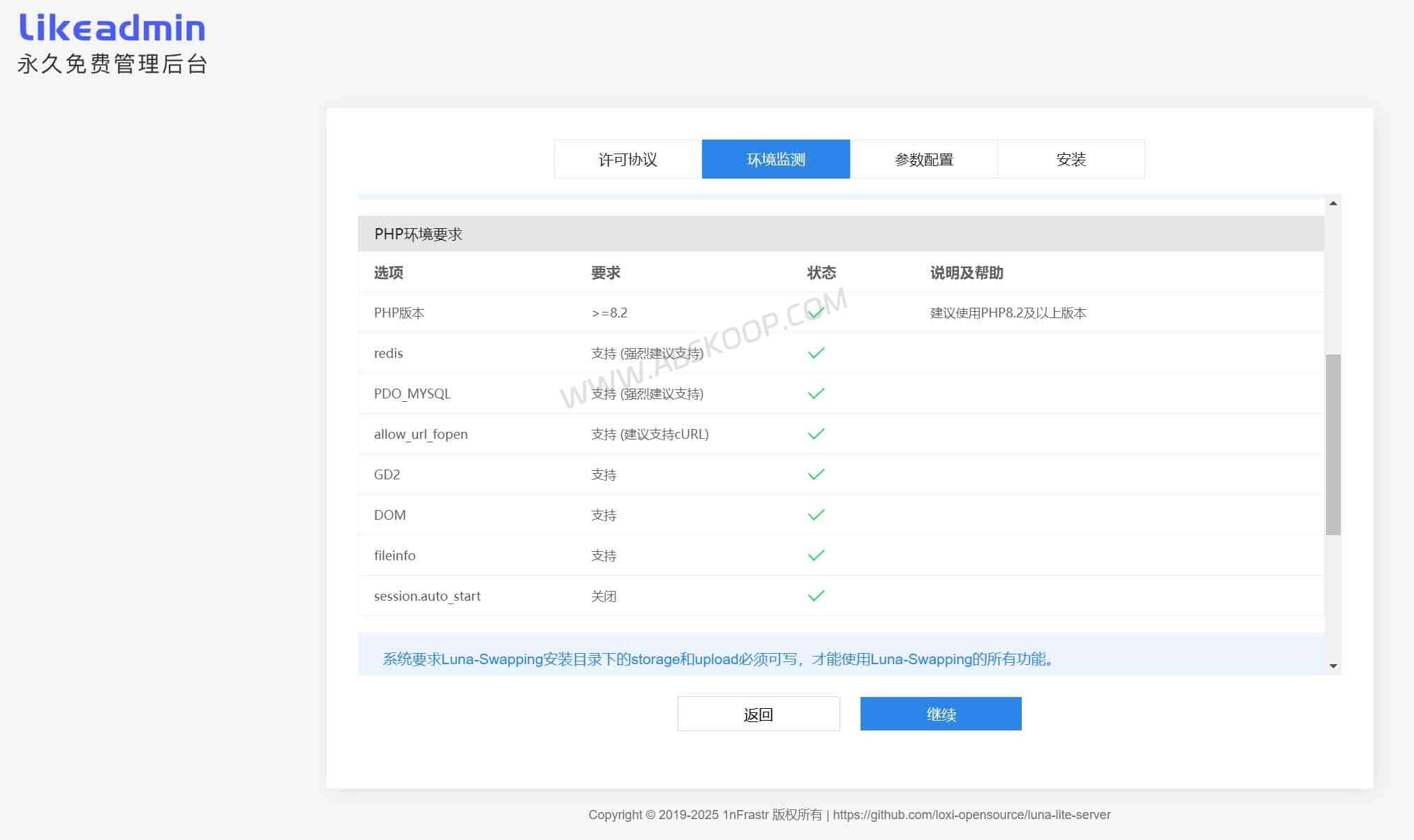
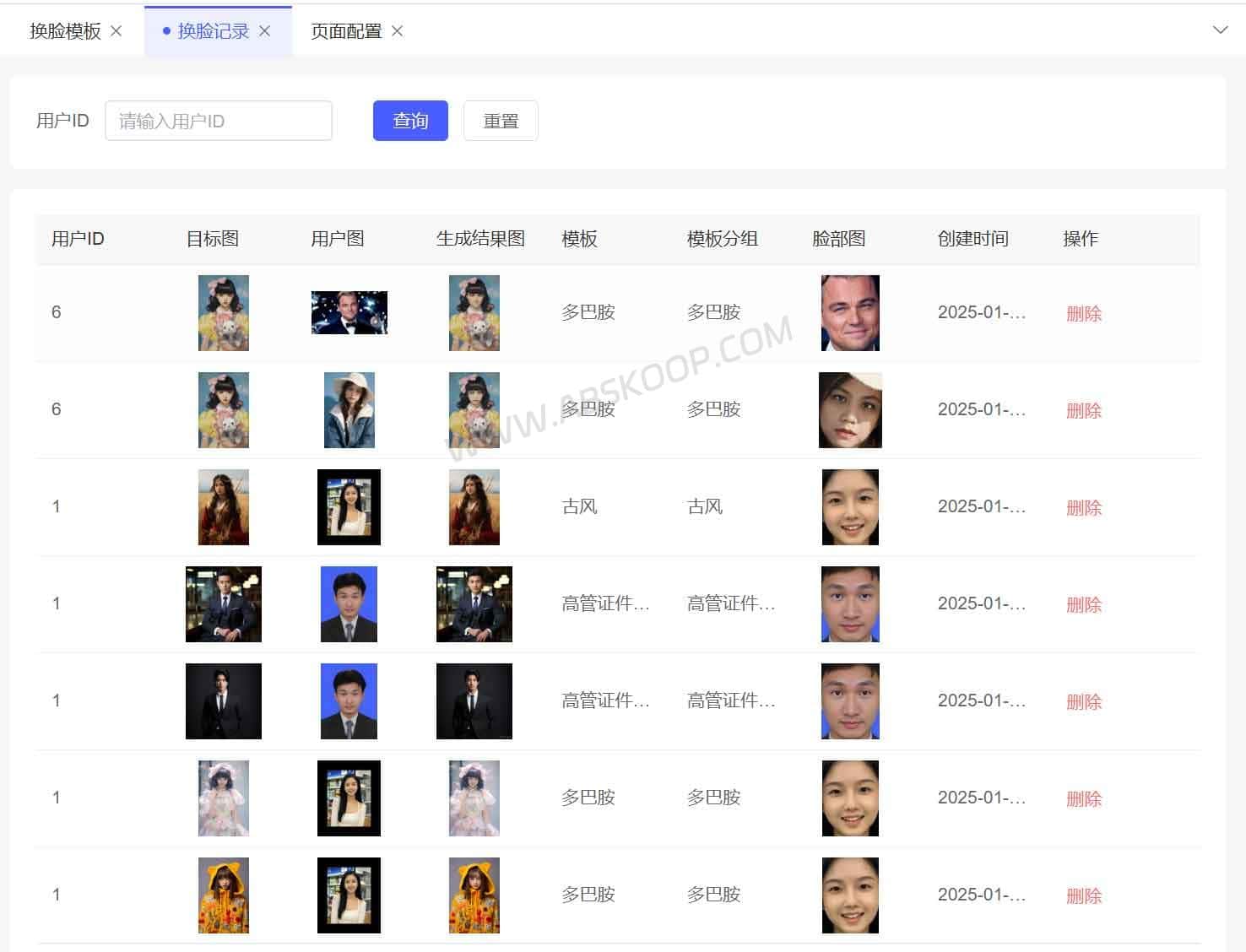
The admin side covers face-swap templates, generation records, page configuration, and the installation workflow. The dashboard is based on Likeadmin-Laravel, which provides part of the underlying application structure.
What are the current limitations of Luna Lite?
Luna Lite has most of the application shell in place, but it is not a system you can install and put into production without additional work.
- The default stack is not fully local: it still relies on an external face-swap API and Alibaba Cloud OSS. Using an internal model requires additional API and storage work.
- Payments are unfinished: WeChat mini-program payments, recharge, and point purchases are still listed as TODO.
- Multi-person face swap has not returned: the feature existed in the older project but was removed during the Lite rewrite and remains on the TODO list.
- Development has slowed: as of October 2026, the main repository is not archived, but the latest visible Release is still v1.0.0 from January 2025, and the main branch was last pushed on January 30, 2025.
For prototypes, internal testing, or a project that you are prepared to maintain yourself, those gaps may be manageable. A longer-term production deployment needs a plan for the face-swap provider, storage, payments, and future code maintenance.
Licensing is worth checking before commercial use
Luna Lite is split across several repositories, and the licensing information is not presented in exactly the same way in each one.
The mini-program repository includes an MIT LICENSE. The server’s composer.json and the admin project’s package.json also declare MIT, but GitHub does not currently identify a repository-level license for the main server repository.
That does not automatically mean the server cannot be used commercially, but it is a reason to check the relevant repository files and third-party dependencies before redistributing or building a commercial product around the code.
Luna Lite content restrictions
The project’s FAQ restricts sexual content, political content, celebrities, and public figures. Ordinary users are also not allowed to upload arbitrary target images in the default workflow; target templates are managed by the administrator.
There is another practical issue that the repository does not fully answer: how long face images are retained by every connected service, how deletion is handled across storage providers, and what an external face-swap API does with uploaded images.
Anyone deploying the system needs to check those details with the storage and algorithm providers they actually use.
Who is Luna Lite for?
Luna Lite makes the most sense for developers or small teams that already have a server and are comfortable maintaining a PHP application. It can save time if the goal is to build an AI portrait, AI face-swap, or ID-photo mini program without writing the user flow, admin dashboard, template system, and API layer from scratch.
It is a poor fit for someone simply looking for an online face swap tool. Even after Luna Lite itself is installed, you still need storage, a working face-swap API, and a WeChat mini-program setup.
Luna Lite FAQ
Can Luna Lite run completely offline?
Not with the documented default setup. The digital identity workflow relies on Alibaba Cloud OSS image processing, while face swapping relies on an external API. A fully local setup requires replacing those services with your own storage and model infrastructure.
Does Luna Lite support Docker?
The official deployment guide is built around PHP 8.2, MySQL, Redis, and Nginx, with BT Panel used in the example. There is no official Docker deployment path documented at the moment, so a containerized setup would need to be prepared and tested separately.
Is Luna Lite still actively maintained?
The repository is still available and has not been archived. However, development activity is limited. As of October 2026, the latest visible Release is v1.0.0 from January 2025, and the main repository’s latest push is dated January 30, 2025.
Luna Lite project links
Luna Lite server: https://github.com/loxi-opensource/luna-lite-server
Luna Lite mini program: https://github.com/loxi-opensource/luna-lite-uniapp
Luna Lite admin: https://github.com/loxi-opensource/luna-lite-admin
Archived Luna Swapping repository: https://github.com/loxi-opensource/luna-swapping
Repository-listed project homepage: https://luna.iartai.com/


Comments (0)