



DeepSukebe is a browser-based generative AI image service commonly described as an “AI clothes remover.” Despite the name, it does not uncover or recover what was actually hidden underneath clothing in a photograph.
Instead, DeepSukebe generates new image content. The AI uses visible information such as a person’s pose, body outline, lighting, skin tone, and surrounding image structure to predict and create areas that were never captured in the original photo.
That distinction matters. A generated result may look realistic, but it should not be treated as an accurate reconstruction of a real person’s body.
This guide explains what DeepSukebe actually does, how this type of AI clothes remover works, whether there is a DeepSukebe app for iPhone or Android, what the free tier includes, and what users should know about image retention, privacy, consent, and accuracy.
What Is DeepSukebe?
DeepSukebe is a web-based AI image-generation service focused on adult-oriented image transformation.
It is sometimes described online as an AI clothes remover, an “undress AI” service, or a tool that can reveal what is underneath clothing. Those descriptions can give the wrong impression about what the technology is actually doing.
A digital photograph only contains the pixels that were captured by the camera. If part of a person’s body is covered by clothing, the photograph does not contain a hidden second layer showing what was underneath.
DeepSukebe therefore cannot retrieve that missing information.
From a technical point of view, the process is closer to generative image inpainting. The model analyzes the visible parts of an image and generates new pixels for areas it is asked to modify.
In simple terms: DeepSukebe does not reveal a hidden version of the original photo. It creates a new AI-generated interpretation of it.
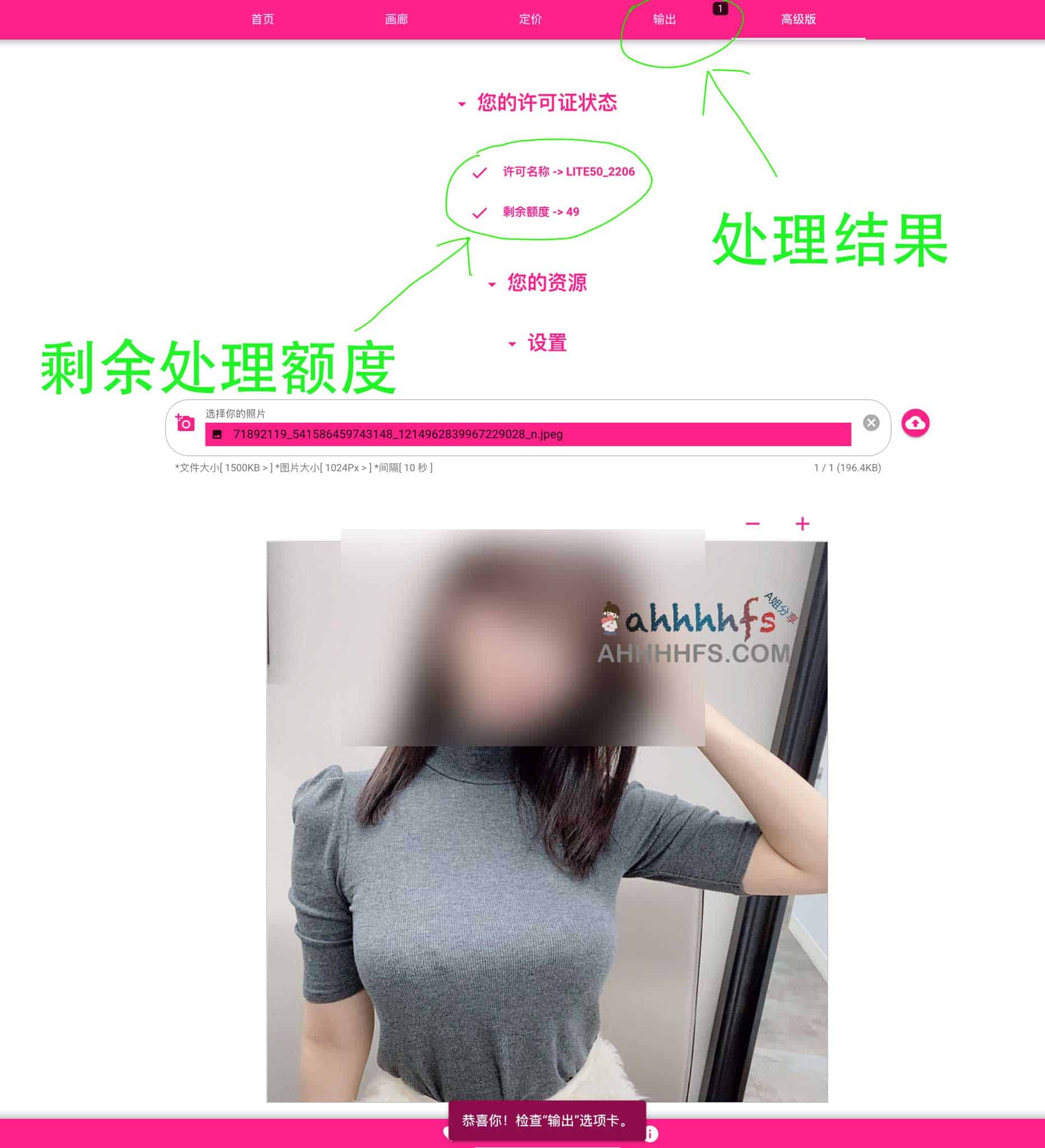
Does DeepSukebe Really Reveal What Is Under Clothing?
No.
This is probably the most important thing to understand about DeepSukebe and similar AI clothes remover services.
Imagine a person’s arm is completely covered by a jacket. The original image contains pixels showing the jacket, but it does not contain a separate record of the exact shape, skin texture, marks, or other details underneath it.
An AI model can estimate what might plausibly appear there based on patterns learned from other images. It cannot know what was actually there when the photograph was taken.
The same principle applies to any covered part of an image.
Different AI models can generate different results from the same source photo. Even running the same image through a model more than once may produce changes in body proportions, texture, lighting, or other details.
That variability is another sign that the output is generated rather than recovered.
Why Can AI-Generated Results Look Real?
Modern generative image models have become good at reproducing photographic details such as lighting, shadows, skin tones, perspective, and body structure.
As a result, an image can look convincing at first glance.
But visual realism is not the same thing as factual accuracy.
If information was never captured in the original image, an AI system still has to invent it. A convincing result may therefore contain realistic-looking details that never existed in the real scene.
This is why a DeepSukebe result should not be used as evidence of a person’s actual appearance or treated as an authentic “uncensored” version of a photograph.
How Does the DeepSukebe AI Clothes Remover Work?
DeepSukebe does not publicly expose every technical detail of its current models, but the basic idea behind this type of image generation is straightforward.
The AI examines information that is already visible in the source image, including:
- body position and pose;
- visible body contours;
- lighting and shadows;
- skin tone;
- camera angle and perspective;
- background structure; and
- nearby visual features.
The model then predicts image content that fits those visual cues.
The generated region is blended into the rest of the picture so the final output can resemble a continuous photograph.
Technically, this is much closer to generative filling or image inpainting than to “seeing through” clothing.
The model is making a visual prediction, not recovering hidden photographic data.
Does DeepSukebe Have an App?
DeepSukebe is primarily a browser-based service.
Its official information has listed support for desktop computers, tablets, Android devices, and iOS devices. In practice, this means the website can be accessed from a modern mobile browser.
That does not necessarily mean there is an official native DeepSukebe app in the Apple App Store or Google Play.
This distinction is important because searches such as “DeepSukebe app,” “DeepSukebe iOS,” and “AI clothes remover app” can lead to third-party download pages or unrelated applications using similar names.
If an installer is being offered outside the official service, check who developed it, what permissions it requests, where uploaded images are sent, and whether it includes recurring subscriptions before installing anything.
Can You Use DeepSukebe on iPhone?
Yes, the web version can be accessed from an iPhone browser.
An iPhone user does not need a separate native app simply to open the service.
This is also why references to a “DeepSukebe iPhone app” can be misleading. In many cases, people are referring to the mobile website rather than an App Store application.
For any service that requires uploading personal photographs, using the official web address is generally easier to verify than installing an unofficial package from an unknown source.
Is DeepSukebe Free?
Yes, but the free version is mainly useful for seeing how the service works.
Free users usually have to wait in a queue, and the image size and output quality are more limited. Using credits gives you priority processing, larger uploads, higher-resolution results, and access to additional model or enhancement options.
| Feature | Free | With Credits |
|---|---|---|
| Processing | Queue | Priority |
| Result | Blurred or limited | Clearer output |
| Upload size | About 500 KB | About 1.5 MB |
| Image size | Up to about 640 px | Up to about 1024 px |
| AI model | AI v4.0 | AI v4.0+ options |
| Enhancement | Limited | More options |
If you are only checking what DeepSukebe does, the free tier is enough to get a general idea. The paid option mainly makes sense if you want faster processing or fewer image limits.
The pricing page is a little messy at the moment. It has shown package names such as TEST and TEST2, and some older DeepSukebe guides now list prices or credit packages that no longer match the current site.
So instead of relying on an old tutorial, check the price, number of credits, and payment method shown on the current checkout page before paying.
Does DeepSukebe Require an Account?
Basic browser access has not always required users to create a conventional account with a username and password.
Payment-related features may still require an email address so the service can deliver a ticket or other purchase information.
There is an important difference between not having an account and being anonymous.
If an image is uploaded to a web service for processing, that service’s infrastructure receives the uploaded file along with normal request information required to process it.
For privacy purposes, questions such as how long files are retained, whether generated images can be deleted, what logs are stored, and how uploaded material is handled are more useful than simply asking whether registration is required.
Does DeepSukebe Store Uploaded or Generated Photos?
DeepSukebe has published several image-retention rules over time, which is one reason older tutorials can be confusing.
Previous public information has referred to generated images being retained for approximately 31 days for Premium users and approximately one day for other users. The service has also published an update stating that it planned to move generated-image retention toward a 24-hour period.
Because those rules have changed, it is safer not to assume that every image is deleted at exactly the same time under every account or service tier.
Anyone considering uploading sensitive material should check the current retention and privacy information before uploading it.
Automatic deletion should also not be treated as a substitute for minimizing sensitive information in the first place.
Images containing a recognizable face, real name, home address, identity document, workplace information, or other personally identifying details carry additional privacy risk when uploaded to any third-party image-processing service.
Can You Upload Photos of Real People?
The fact that a website technically accepts an image does not mean a user necessarily has the right to upload or alter that image.
When a real person is involved, consent and age are especially important.
A photograph being publicly available online does not automatically give other people permission to upload it to a third-party AI service or create an adult-oriented synthetic version of that person.
Images involving minors should not be used for this type of transformation. Images where a person’s age cannot be reliably established also create serious risk.
The same caution applies to private photographs,偷拍 images, images of coworkers or acquaintances, and photographs taken from personal social media accounts without permission.
For research or technical testing, synthetic people, clearly licensed material, or images for which the user has appropriate rights and consent avoid many of these issues.
Are DeepSukebe Results Accurate?
DeepSukebe can generate images that resemble photographs, but that does not make the generated details accurate.
Typical generative-image problems can include unnatural body proportions, inconsistent anatomy, incorrect edges, mismatched lighting, altered facial or body features, and details that did not exist in the source photograph.
Results can also change when the underlying AI model is updated.
The same input processed at different times may therefore produce noticeably different outputs.
A better way to evaluate DeepSukebe is to think in terms of generation quality and visual consistency, not whether it has accurately reconstructed a real person’s body.
Why Do Older DeepSukebe Tutorials Look Different?
DeepSukebe has existed long enough that many search results now point to guides written for older versions of the service.
Those guides may show interfaces, prices, model names, upload limits, domains, or retention rules that no longer match the current website.
Before relying on an older DeepSukebe tutorial, compare its screenshots and claims with the current service.
The details that tend to become outdated fastest are pricing, free limits, credit systems, AI model versions, image-retention policies, and whether mobile access is being described as an actual app or simply a browser-based service.
Older guides can still explain the general idea behind the service, but current pricing, privacy rules, and platform support should be checked against the current website.
What Should You Use for Normal Photo Editing Instead?
Some people reach pages about AI clothes remover tools when their actual goal is ordinary image editing.
If the goal is changing an outfit, an AI virtual try-on or clothing changer is a better match.
If the goal is changing the color or style of clothing, a photo editor with masking and generative fill provides much more control.
If an unwanted object needs to be removed, an AI object-removal tool is designed specifically for that job.
Background replacement is better handled by a background remover or AI background generator.
For low-resolution or blurry photos, image upscaling, sharpening, denoising, or restoration tools are more appropriate.
Using a tool designed around the actual editing task also avoids unnecessarily uploading personal photographs to an adult-oriented image-generation service.
DeepSukebe FAQ
What is DeepSukebe?
DeepSukebe is a browser-based generative AI image service commonly described as an AI clothes remover. It generates new image content based on visual information in an uploaded picture.
Does DeepSukebe reveal a person’s real body?
No. It cannot recover information that was never recorded in the original photograph. The AI predicts and generates new pixels, so the output is a synthetic interpretation rather than a factual reconstruction.
Is DeepSukebe real or fake?
DeepSukebe is a real web service, but its generated output should not be confused with real hidden photographic information. The service generates an AI-created image rather than uncovering an original layer beneath clothing.
Is there a DeepSukebe app for iPhone?
DeepSukebe can be used through a web browser on iOS. Mobile browser support does not necessarily mean there is an official native iPhone app in the App Store.
Is DeepSukebe free?
DeepSukebe has offered free processing with restrictions such as queues, smaller image limits, and limited output. Paid or credit-based usage has provided additional processing and image options. Exact limits can change over time.
Does DeepSukebe require registration?
Basic use has not always required a traditional account. However, some payment-related functions may require an email address. No account requirement should not be interpreted as complete anonymity.
Does DeepSukebe save photos?
DeepSukebe has published different retention periods over time, including one-day retention for some users and longer retention for Premium users, along with plans for broader 24-hour deletion. Current privacy information should be checked before uploading sensitive images.
Can DeepSukebe results be trusted?
They can look realistic, but they should not be treated as evidence of a person’s real appearance. The output contains AI-generated details that may differ from reality.
So, What Is DeepSukebe Really Doing?
The simplest way to understand DeepSukebe is as a generative image tool.
The phrase “AI clothes remover” makes the process sound as though software is uncovering information hidden inside the original photo. That is not how it works.
The original image contains only the pixels captured by the camera. DeepSukebe uses those visible pixels as context and generates a new interpretation for areas that were not visible.
The result may look photographic, but it is still generated content.
For anyone researching the technology, that distinction is more important than the visual effect itself. For real-person images, consent, age, privacy, and data retention should be considered before image quality or convenience.
Sources and Further Reading
- DeepSukebe pricing and feature information
- DeepSukebe help and contact information
- DeepSukebe update history
- DeepSukebe About page


Comments (0)